When you drive through Chattooga County in Northwest Georgia (where we live), most of the cattle operations look pretty much the same: A herd spread across a big open pasture. A stock tank in the middle with a float valve to keep it full. A couple of shade trees, a round bale feeder for winter, and a mineral tub somewhere close by.
The cattle have access to everything at all times, and the rancher checks on them every few weeks (maybe even less often).
That setup is called continuous grazing or “set stocking,” and it’s by far the most common way to raise cattle around here.
The infrastructure required is minimal: one water source, one fence around the perimeter, and hay in winter. You could set it up in a weekend and largely leave it alone.
We do the opposite.
Before our first calf ever walked onto our property, we were installing frost-free hydrants along the pasture perimeters so we could supply water to any paddock without depending on a central tank. We strung fencing; bought reels, step-in posts and portable troughs; and we built a sled to drag the mineral feeder forward as the herd advances.
The upfront work was significant, and the ongoing management doesn’t stop once the infrastructure is in place.
For example, every morning when the sun comes up – and after opening the chicken tractor, moving the rabbits (we keep our grow-outs in mobile harepens), and feeding the pigs – I move our cattle to a fresh patch of pasture.
By the time I walk down to their paddock, our heifer calves — Black Angus with some Brahman bred in, about six months old as of this writing — are usually already lined up at the polywire waiting for me.
They know the drill.
I unhook the reel on one end of the cross fence, call out “come cows,” and they walk through to a fresh strip of grass on the other side before I close the wire behind them.
That part moves fast, but most of the real work happened the day before. That’s when I set up the next day’s cross fence ahead of the herd and positioned the water trough.
We run one trough between two paddocks, with the cross wire splitting it so each day’s strip has access.
On some occasions, I didn’t get the next paddock prepped the evening before. When that happens, I’m out there tipping over a trough, hauling it to the front, and filling it back up. That adds time. But on a normal day when everything is properly staged, the morning move is quick.
Why go through all that hassle?
We do it because we’ve realized that continuous grazing deteriorates soil and pasture over time, while management-intensive grazing improves both.
Note that this article primarily talks about the reasons why we utilize rotational grazing. If you’re looking for more information on how to leverage this strategy, I recommend reading this article about our rotational grazing setup.
We’re Grass Farmers Who Happen to Raise Cattle

That sounds like a game of semantics, but it’s not.
Our goal is to produce the healthiest beef we can on our 45 acres. The quality of that beef depends on the quality of the forage, which depends on the soil underneath it.
Compacted ground with low biological activity grows thin, weak grass. Cattle eating that kind of forage gain weight slowly, get sick more often, and produce meat that reflects what they ate.
In other words, the whole chain starts in the dirt.
That realization is what pushed us toward management-intensive grazing.
The concept is simple enough: move your cattle through small paddocks frequently so the grass is grazed evenly, then give it a long rest before the animals return.
People use different names for it: rotational grazing, adaptive multi-paddock grazing, mob grazing.
Whatever you choose to call it, the core idea doesn’t change.
Graze, move, rest.
The infrastructure and the daily time commitment exist to serve that sequence. Without water access at every paddock, flexible fencing and a routine that keeps the herd moving forward, the system doesn’t work.
But once it does work, the effects compound in ways that are worth understanding.
What Continuous Grazing Does to a Pasture

Our property came to us with a lot of broomsedge, goldenrod and brambles. The previous owner made hay for years, pulling nutrients out of the land without putting much back into it.
That’s a common story in this part of Georgia.
The fescue base is still there, but it’s been weakened by decades of extraction, and less desirable plants have moved into the gaps. Broomsedge, for example, is a dead giveaway that soil fertility has dropped – especially phosphorus and pH. (That’s because the plant isn’t particularly aggressive on its own; it just does well where better grasses can’t compete, and on depleted or acidic ground, that’s enough.)
Continuous grazing accelerates that kind of decline.
Cattle are picky eaters when they have a choice. Given a big pasture with mixed species, they’ll walk right past the broomsedge and goldenrod to find the young fescue and clover. They graze their favorites down short, and when those plants try to regrow, the cattle come back for that second bite before the roots have had a chance to recover.

Keep doing that through a full grazing season, and you’re slowly killing the plants you want while giving a free pass to the ones you don’t.
The nutrient problem compounds it. With a central water source and central minerals, cattle spend a disproportionate amount of time in those areas. They loaf and defecate, and over a season, those high-traffic zones accumulate a huge share of the pasture’s fertility while the rest of the field gets nothing.
Plus, the ground around the water tank becomes a compacted mud pit that sheds rainwater instead of absorbing it.
Meanwhile, the far end of the pasture gets more nutrient-poor every year. You end up moving fertility from where it’s useful to where it’s wasted.
Then there’s parasites. Cattle on a continuously grazed pasture are constantly walking through their own manure, especially around congregation areas.
Internal parasite larvae – barber pole worm being the big concern around here – can develop from eggs to the infective stage in four or five days when it’s warm and wet. Every time a cow grazes near a recent manure pat, she risks picking them up.
That’s why so many conventional operations treat deworming as routine maintenance; the cattle aren’t naturally prone to heavy parasite loads, the management system being utilized just keeps them exposed.
On our 45 acres, we could probably carry around 15 cow-calf pairs under continuous grazing. UGA Extension figures for fescue-dominant pasture in our region suggest roughly two and a half to three acres per pair when you’re set stocking.
Instead, we’re moving cattle daily, and that changes what the land can support. UGA Extension research on Georgia pastures documents a 25-38% improvement in carrying capacity under well-managed rotational grazing, which translates to somewhere around 19–21 pairs on our acreage.
Practitioners running fully stacked systems push those numbers considerably higher. Joel Salatin reports something closer to a fivefold increase over the county average at Polyface, but his cattle aren’t working alone. Chickens follow behind, scratching through manure pats, consuming fly larvae, and cycling fertility back into every paddock. Our chickens aren’t running on the same tight schedule — the cattle move faster than the chicken tractor allows — but they’re working through the same ground, breaking up cow pats and adding their own fertility as they go.
Set-stocking would be easy. We already have the old stock tank near our second well with a float valve from the previous owner. All the infrastructure we’d need for that setup is in place. Throw some hay in winter and check on things occasionally. Easy enough. But a few years in, the broomsedge would be worse, the fescue weaker, the soil harder underfoot. You’d need more hay every winter to make up for what the pasture was no longer producing.
What Changes When You Move the Cattle Daily

When I open that polywire each morning, and the calves walk onto fresh grass, the effects ripple through the whole system in ways that aren’t obvious at first.
First off, the cattle eat what’s in front of them instead of picking favorites across a big area. At the density we’re running in a single-day paddock, they graze pretty evenly. The fescue and clover get pruned, and a fair amount of the young broomsedge and goldenrod gets eaten too — stuff they’d completely ignore if they had the run of a larger field.
That kind of non-selective grazing pressure is one of the most effective ways I know to push back weeds without herbicides.
The bigger payoff is rest. The paddock the cattle just left won’t see them again for weeks. In spring, when growth is fast, that might be 30 days. In the slower months, it can stretch past 60. During that window, grazed plants rebuild leaf area and regrow their root systems. Fescue that gets grazed once and then left alone for a month or two comes back dense and competitive enough to shade out broomsedge and crowd it for water. Instead of the good grass getting weaker with every pass, it actually gains ground.
Manure distribution changes, too, and I think most people underestimate how much this matters. When the cattle are in different spots every day, their dung and urine spread across the entire pasture rather than concentrating near the water tank. A USDA overview of nutrient cycling in pastures explains how managed grazing systems meaningfully reduce the concentration problem you see under continuous grazing, where most of the manure ends up on a quarter-acre of already dead ground.
The parasite situation changes in our favor, too. When cattle leave a paddock after a single day, the eggs in their manure haven’t had time to become infective larvae. By the time the herd rotates back weeks later, those larvae are dead. Short grazing periods combined with a rest period of 35 to 65 days can reduce parasite loads dramatically, often enough to make chemical deworming unnecessary. That matters to us because dewormers also kill dung beetles, which perform important work by breaking down manure and cycling nutrients back into the soil. Healthy beetle populations keep the whole cycle running.
Fly pressure drops for a related reason. Horn flies lay eggs in fresh dung within minutes of deposition, and their lifecycle runs 10 to 20 days. When the cattle move on and those pats dry out, the breeding habitat disappears. We still deal with flies — this is Georgia, after all — but the numbers are noticeably lower than what you’d see on a set-stocked farm.
Nature Figured This Out Long Before We Did

None of this is new thinking. Before European settlement, somewhere between 30 million and 60 million bison moved across North America in massive herds. They didn’t spread evenly across the landscape. They bunched tightly. Wolves and predator pressure kept them moving together. A herd would graze an area hard, trample the ground, deposit manure, and move on. That same piece of ground might not see bison again for months or years.
That cycle of intense disturbance followed by long recovery built some of the deepest, most fertile soils on Earth. Great Plains prairie soils reached three feet deep in places with organic matter above 7%. And it wasn’t happening despite the grazing. The grazing was driving it.
The Serengeti shows the same thing on another continent. When wildebeest populations crashed to around 300,000 in the mid-20th century because of livestock disease, the ungrazed vegetation piled up and fueled wildfires that burned most of the ecosystem every year. The whole place became a net carbon emitter. When the herds recovered to over a million animals, the fires stopped, and the grassland went back to functioning as a carbon sink. Turns out the grazing was maintaining the system, not wrecking it.
We don’t have wolves on our 45 acres, and we don’t have a million-animal herd creating its own grazing patterns through predator pressure. We have a handful of heifer calves that would happily spread out and selectively overgraze the best grass if we let them. So the electric fence stands in for the predator. It keeps them bunched and forces the move. The daily rotation mimics the migration, and the long rest gives the pasture the recovery window that grasslands evolved to need.
André Voisin, a French biochemist, worked much of this out in the 1950s on his farm in Normandy, where he tripled carrying capacity by following what he called the four laws of rational grazing. His thinking influenced Allan Savory, who built holistic management into a broader decision-making framework for land and livestock. Joel Salatin at Polyface Farm in Virginia made these ideas accessible to a whole generation of small-scale farmers. Will Harris at White Oak Pastures in Bluffton, Georgia — not far south of us — converted a conventional commodity cattle operation into a multi-species regenerative ranch that now processes its own animals and sells direct to consumers.
Greg Judy in Missouri went even further with ultra-high-density mob grazing on leased land, building inches of topsoil in a few years while running cattle, sheep, pigs, and chickens together. Gabe Brown in North Dakota raised his soil organic matter from under two percent to above six, stopped buying synthetic fertilizer, and wrote Dirt to Soil, probably the best single book on the practical side of all this. Jim Gerrish spent two decades at the University of Missouri Forage Systems Research Center and then wrote the literal textbook, Management-Intensive Grazing.
These folks figured it out on thousands of acres with huge herds. The principles don’t care about acreage.
Stockpiling Grass For Winter Instead of Making Hay

One of the things that got me most excited when I started researching this was stockpiling fescue. Tall fescue is a cool-season grass that keeps growing actively in fall long after bermudagrass and other warm-season species have quit for the year. If you pull cattle off a section of pasture around early September and the soil has decent fertility, that fescue will put on serious growth before cold weather shuts it down, — often 2,000 to 4,000 pounds of dry matter per acre.
Most stockpiling guides recommend applying synthetic nitrogen to deferred pastures in September, but we let our chickens do that work instead. They eat grain, poop, and put nutrients into the soil for us. It’s slower and less precise than spreading ammonium nitrate, but it fits how we want to run this place. And the nutritional quality of what grows holds up through frost. Research from Virginia found that stockpiled fescue contains significantly more energy and crude protein than average grass hay, which isn’t what most people expect.
The trick is to strip-graze the stockpile with a temporary fence instead of letting the cattle have at it all. Turn them loose on the whole thing, and you’ll get maybe 20 to 30 grazing days per acre. Strip graze it, and the same forage stretches to 60 or 70-plus. One operation in Virginia got a hundred and eleven days of winter grazing off 17 acres by allocating just a few days’ worth at a time. The rough math is that an acre of well-managed, stockpiled fescue can support a cow for one to two months.
Here’s the thing about hay that most people miss: it’s not just feed, it’s imported fertility. We actually bought hay this year on purpose — not because we had to, but because we wanted to bring nutrients onto the property.
You roll a bale out on pasture, the cows eat some and trample the rest into the ground, and you’ve just applied organic matter and nutrients without a spreader or a bag of synthetic fertilizer.
Pound for pound, hay is still relatively inexpensive compared to commercial fertilizer, and the labor of rolling it out is minimal.
I’m not opposed to buying hay again next winter for the same reason. When you think of it as a soil amendment that also happens to feed cattle, the math changes.
That said, the long-term goal is to need less of it. When you can keep cattle on stockpiled pasture through December or into February, you’re feeding off your own land instead of importing feed from someone else’s. For example, the University of Arkansas ran a project in which 38 cows on 130 acres needed outside hay for only 18 days during the year.
We haven’t been through a stockpiling cycle yet. We just started running cattle. But the infrastructure is in place, and the fescue is there. The plan is to defer a section of pasture in September, so we have standing forage ready by late fall. Between stockpiled fescue and hay we buy specifically to build fertility, we should be able to get through winter while actually improving the land in the process.
Why the Investment Makes Sense on a Homestead

We’re not a commercial operation. Nobody here is selling calves at auction or tracking revenue per head. We’re raising beef for our family and trying to build up our land as we go. That changes how we look at the numbers, but it doesn’t make cost irrelevant.
The upfront investment was real: frost-free hydrants, a solar energizer, polywire, reels, step-in posts, portable troughs. It added up. But most of it is one-time infrastructure that lasts for years, and the ongoing savings are where we expect things to shake out.
As I mentioned above, we think of hay as much as a soil amendment as a feed source, so it’s not a pure cost in our eyes. But the numbers still favor managed grazing.
A USDA-monitored study on a Texas ranch found that a rotational system spent roughly $6,000 less on feed and $4,000 less on fertilizer than a continuous system over 3.5 years. We’re running a much smaller operation, but the principle is the same: cattle that spread their own manure evenly and trample organic matter into the ground are doing soil-building work that you’d otherwise have to pay for.
Vet bills go down when parasite loads are low, and fertilizer needs shrink as the soil biology ramps up. The land gets better over time, with thicker forage, fewer weeds, and ground that soaks up rain instead of sheeting it off. People who’ve been doing this for a decade describe soil that’s darker, softer, full of earthworms and fungal threads. You can’t put a dollar figure on that, but it’s why we’re doing this.
What We’re Still Figuring Out

I don’t want to make this sound as if we’ve nailed it. We’re early, and there’s plenty we’re still working through. Sizing paddocks correctly takes practice and feel, and I get it wrong more often than I’d like. The summer slump (fescue basically shuts down in July and August heat) is a planning problem we don’t yet have a clean answer for. We’ll probably need to bring in some warm-season species eventually.
Broomsedge and brambles aren’t going away fast. We already have clover patches scattered throughout the pasture, and as soil fertility improves, those should expand on their own. We soil test regularly and apply lime and phosphorus where the numbers indicate we need them. Rotational grazing and soil amendments work as a team. One without the other won’t get it done.
The next thing we want to bring online is the integration of our poultry into the cattle rotation. The plan is to run chicken tractors about three days behind the cows, so the birds can scratch through the dung pats and eat fly larvae before they mature into adults.
Joel Salatin made this approach well-known at Polyface Farm. Three days is roughly the sweet spot: enough time for the larvae to grow large enough that the chickens want them, not enough for them to emerge as flies. The cattle get natural pest control, the chickens get a high-protein supplement to their diet, and nobody reaches for a chemical fly treatment. We’re still sorting out how to stage the tractors relative to the paddock moves, but all the animals are already on the same property. We just have to figure out the staging.
The daily time commitment is real. Between prepping the next paddock in the evening and moving cattle in the morning alongside everything else, grazing management adds maybe 15 to 30 minutes to my day. But it’s time spent building up the land, not just maintaining it.
This Is a Long Game

We’re not going to turn these pastures around in one season. Nobody does. The people who’ve been at this the longest — Judy, Brown, and Gerrish — all talk about meaningful soil changes showing up over five to 10 years. We’re at the very beginning. Our heifer calves are six months old, our fencing system is still evolving, and we haven’t stockpiled our first winter’s worth of forage yet.
But every morning when those calves walk through the open wire onto a fresh strip, the system is doing what it’s supposed to do. The paddock behind them gets to rest with the manure right where the grass can use it. Next time the herd comes back around, the forage will be taller and thicker.
Add that up over a few thousand mornings, and this place is going to look very different from what it does today. That’s the bet we’re making.
Now I’d love to hear from you! Were you familiar with managing-intensive grazing? Have you used it? Let me know in the comments below.
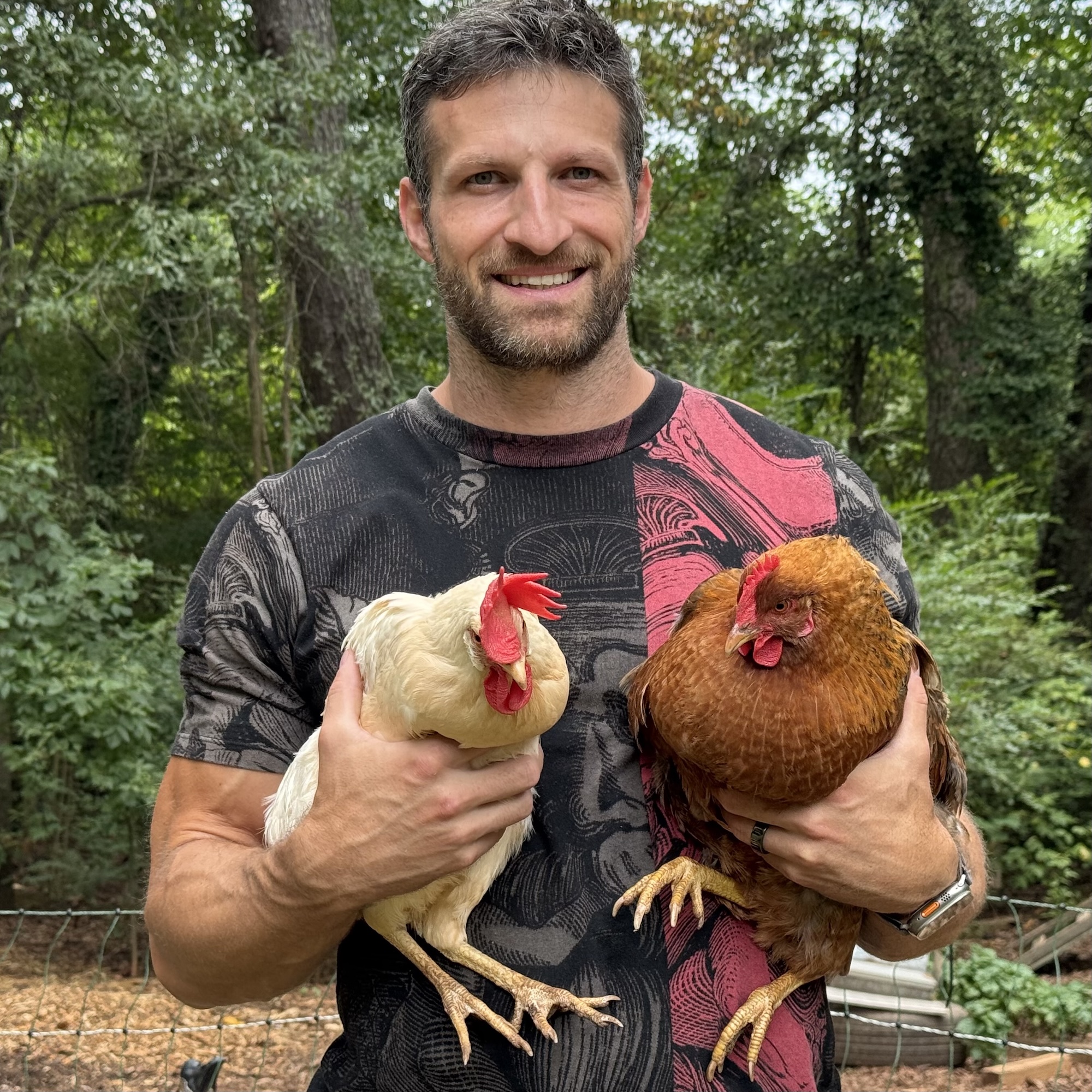
Michael Kummer is a healthy living enthusiast, the founder of MK Supplements and the host of the Primal Shift podcast. His goal is to help people achieve optimal health by bridging the gap between ancestral living and the demands of modern society. He runs the Kummer Homestead with his wife Kathy and their two children.